The Next Dark Age
We're in it Now
Dining in Seattle
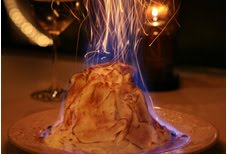
I suppose I should compose actual reviews of the two finer restaurants I have been to this week, but right now all I can think is blahblahSeattleblahSeafoodblahblahblah. Because I just had this for dessert:
Becoming the People I Hate
I am leaving for Seattle tomorrow. And I am packing the laptop.
First, because I might get some real work done on the road. My employer does not require this, but I feel compelled. I hate that.
Second, because I just started that new class on Academic Earth and I want to keep going. And I can’t wait a week? I hate that.
Third, you can never trust a hotel to have the TV channels that you want, not to mention being in a different time zone. So I am bringing Season 1 of True Blood on DVD (that I did finally buy at Target for $17).
Really? I need to bring a whole laptop to watch some DVD’s? I hate that.
Finally, I just don’t think I can survive offline that long. I really hate that.
It seems I am one of those people.
The Best Financial Advice I Have Ever Heard
Liz Pulliam Weston at MSN has updated her article on $500 in the bank. It is the reason that I read MSN Money. So many people that are trying to build an emergency fund are intimidated by the traditional advice – to save six months of expenses for emergencies. The idea of putting away so much is daunting, so we don’t bother to try. The better idea is to start by squirreling away $500. $500 will cover most of the unexpected expenses that derail our savings plans. Car repairs, A/C breaks down, the sweet potato that killed the garbage disposal…
Seriously, if you have been having trouble building your savings, please read this.

The Good News
USA Today reported today:
“Visitor counts at the Smithsonian Institution’s museums have rebounded to more than 30 million visits in 2009 for the first time since a slump following the Sept. 11, 2001 terrorist attacks.”
The Smithsonian doesn’t charge admittance fees, so the economy is “credited” with the uptick. And since area hotels have been slumping, the thought is that Washingtonians are getting out there. Awesome. I cannot tell you how many Saturdays I spent as a poor college student on the National Mall. It always felt like we were surrounded by tourists.
It also didn’t hurt that My All-Time Favorite Museum finally re-opened after that horribly, horribly long renovation.
The article goes on to suggest that the staycation trend has people visiting museums in their own cities, which I think is fabulous. I went to the Art Institute last year, but it was only because my dad was in town. Now that I think about it, I should really get over to the new Holocaust Museum in Skokie.
The moral of the story is that we should use the resources we have available. Museums are relatively inexpensive, generally entertaining and we might even learn something.

Judge’s Ruling
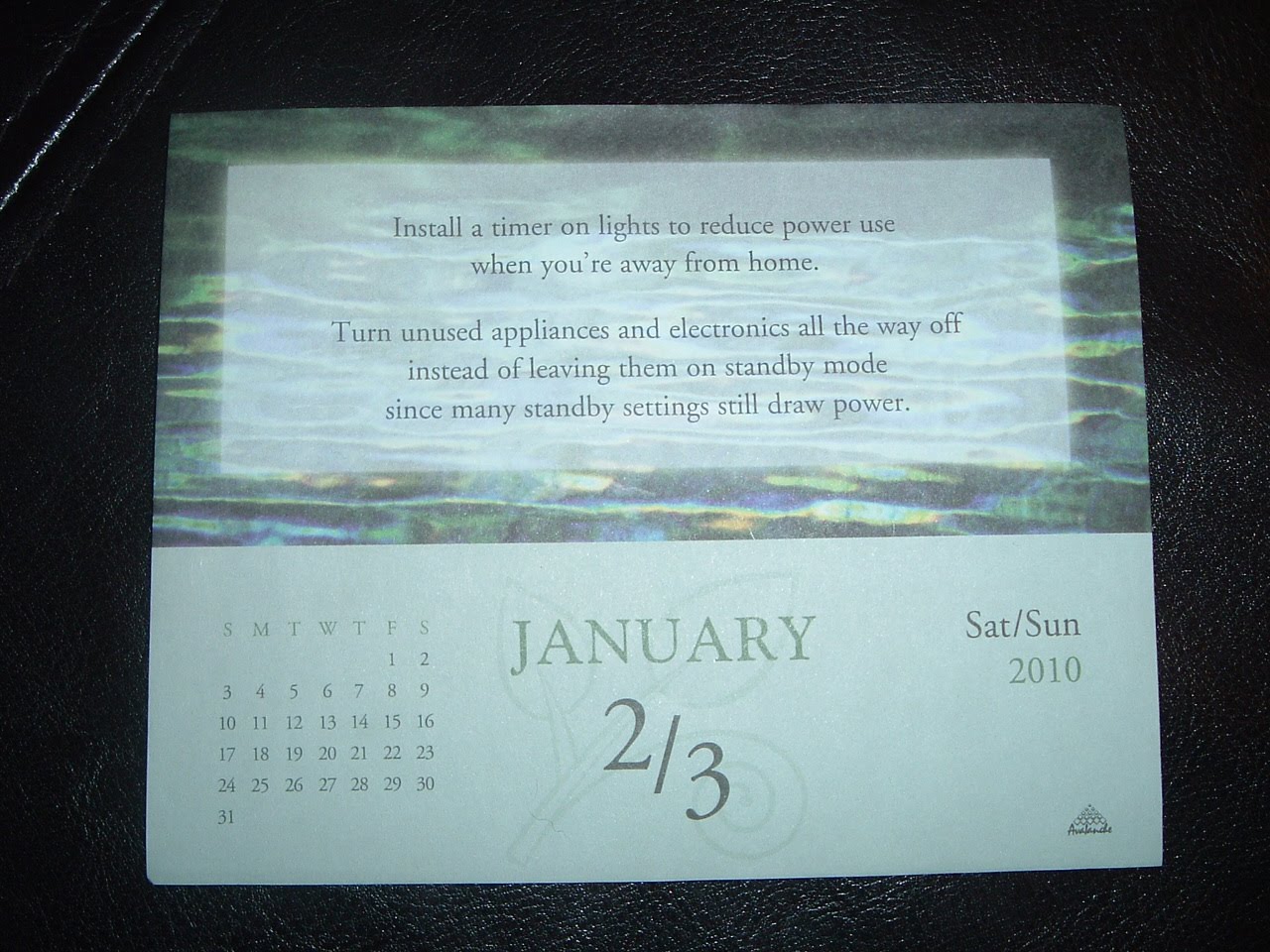
I was telling you about my new box calendar – “365 Little Ways to Save Our Planet”. On the weekend, there was a combined page. How are they going to do 365 Little Ways if every weekend is doubled up? There are two tips on the weekend page. So:
Is combining the weekend page saving paper and “going green”? Or is it a cheap ploy? I can’t decide.

Facebook Etiquette
I had a weird Facebook day. I’ve only been active on it for a few months. I don’t post every day, but I look at it most days.
Mostly, I was expecting a bunch of groaning about the first official day back at work. And there was some of that. My friend Greg was joking that his Wii Fit cursed at him for stepping on. But there was also some serious stuff. My Aunt Jacquelyn was posting about the death of a friend. My friend Austin was in a car accident.
I was just going to post that I had beaten Cake Mania Two. Or that I took out seven episodes of Chuck and have ten to go before Sunday. I would be “I am sitting on the patio” guy except that I don’t post five times a day. And really, if I were to be the personification of a damn commercial, it would be “sitting on lucky couch” guy.
Anyway.
Facebook is such a chaotic mess of random and clever and complaining and celebrating. I don’t know how to respond most of the time, so I just don’t. How lame.
Trying Something New
Score One for Kindle
I finally decided that my next course on Academic Earth will be The Poetry of John Milton, by a Yale professor named John Rogers. I have had Paradise Lost on my shelf since I graduated college, but when I would wander over to pick my next read, it never seemed like reading it myself would be any fun. Each time I looked at it, I wanted Dave Mullaly, AP English Teacher Extraordinaire, to teach it to me.
The textbook is a simple “complete works” that retails for $50. I figured I would take the nice Borders gift card my Dad gave me and buy it off the website. Borders.com doesn’t even list it in inventory.
Spending $50 of my own money on this book is not acceptable. The online used book stores only drop the price down to $40 or so before shipping. So I started asking myself if I really need it. I only really wanted to read Paradise Lost. I hadn’t planned on reading every assigned piece of material. I just thought that being able to follow the lectures with the text in front of me would be cool. Then I thought of the Kindle.
Kindle has tons of out-of-copyright material priced around a dollar, and sure enough, there was a Complete Works of Poetry from John Milton. Done and downloaded.
It is obviously not the same thing. In fact, from the Table of Contents, I am having a great deal of trouble matching up titles of poems to those listed in the Syllabus. And the poems do not have line numbers listed, so it was a bit hard following the professor exactly through the first one. But for $.99 I can certainly deal.
God Bless the Internet.

Best and Worst and Book of the Day
I was at my friend Noah’s last night with my friends. All nerds and big readers. Jamie said he was thinking of committing to the 100 Book Challenge. I told him that if I could (just barely and totally cheating) make 50 in 2009 he could easily make 100. Right now he is reading the third volume of a biography of Lyndon Johnson.
He asked which of the 50 books I liked least. I thought of that one I picked up in Charleston a couple of years ago. This morning, when I got online, I found that I didn’t actually read that book in 2009. So my official answer is The Dogs of Babel. The best, of course, would be The Killer Angels.
You might recall that last year, Joy gave me a Book a Day Calendar. Each day, I would read the page and put it in the Yes or No pile. There were also plenty of books that I had already read. I kinda wish I had made a pile for that, also. Statistics, you know. I could even have made a pile of “Have it but haven’t read it yet.” But I didn’t think of that. Early in the year, I was really worried because the Yes pile was proportionately pretty big. Either the picks became less interesting or I became more discriminating and in the end it was pretty reasonable. So. Just so I have it written somewhere, here is the list To Read.
- Dec 21 – The Blind Side: Evolution of a Game, by Michael Lewis
- Dec 9 – The Lost: A Search for Six of Six Million, Daniel Mendelsohn
- Sept 10 – The Looming Tower: Al-Qaeda and the Road to 9/11, by Lawrence Wright
- Aug 2 – Leave Me Alone, I’m Reading: Finding and Losing Myself in Books, by Maureen Corrigan
- June 16 – Ulysses, by James Joyce
- April 19 – The Friendship: Wordswortth and Coleridge, by Adam Sisman
- April 3 – The Most Famous Man in America: The Biography of Henry Ward Beecher, by Debby Applegate
- Feb 24 – Doctor Zhivago, by Boris Pasternak
- Feb 16 – The Gettysburg Gospel: The Lincoln Speech that Nobody Knows, by Gabor Boritt
- Feb 6 – Sliver of Truth, by Lisa Under
- Jan 17 – Wish I Could Be There: Notes from a Phobic Life, by Allen Shawn
- Jan 16 – Forgetfulness, by Ward Just
- Jan 7 – Born on a Blue Day: Inside the Extraordinary Mind of an Austistic Savant, by Daniel Tammet
I purged a few going through that pile. Wherever I was shopping for calendars didn’t have a Book a Day one, so I picked up 365 Little Ways to Save the Planet. I just opened it and January 1 says,
“Never throw toxic household waste that may contain solvents, such a paint thinner, down the drain or into your trash. Check with your community’s hazardous-waste disposal department for information on proper disposal and drop-off sites.”
Hm. Not impressed.
The White Album, by Joan Didion
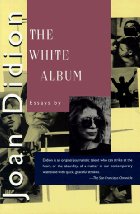 I love Joan Didion. The White Album is a book of her essays, published in 1979, that tells her stories of the late 60’s and early 70’s. I remember when I read The Year of Magical Thinking, her memoir of the year after her husband’s death, I wondered how much of her writing was grief and how much was mad-genius. Reading this, I wondered how much was 1968 and how much was mad-genius.
One highlight comes right at the beginning when she reprints verbatim a psychiatric report done on her in that year. The original problem was vertigo and nausea. From the report:
“It is as though she feels deeply that all human effort is foredoomed to failure, a conviction which seems to push her further into a dependent, passive withdrawal.”
Know anyone like that? Didion says:
“By way of comment, I offer only that an attack of vertigo and nausea does not now seem to me an inappropriate response to the summer of 1968.”
She tells a good story about spending a day at a recording session with The Doors. Morrison was missing. When he finally arrives, there is a pretense that no one notices. The funny thing is that as Didion describes it, Ray Manzarek was the most snarky about Morrison’s absence. I doubt that is how Manzarek would portray the scene.
She also talks about taking her seven year old daughter to the Art Institute where Georgia O’Keefe was in attendance at an exhibition of her work. Little Quintana ran up the stairs to stare at a mural and then said, “I have to talk to her”. Loved that.
Toward the end, in an essay entitled “On the Morning After the Sixties”, Didion describes a scene from when she was at Berkeley in 1953. In summary she says:
“That such an afternoon would now seem implausible in every detail – the idea of having had a “date” for a football lunch now seems to me so exotic as to be almost czarist – suggests the extent to which the narrative on which many of us grew up no longer applies.”
I was reminded in that essay of the theory that Generation X has rather more in common with the Silent Generation (to which Didion belongs) than to Gen Y or those Baby Boomers. She says:
“We were silent because the exhilaration of social action seemed to many of us just one more way of escaping the personal, of masking for a while that dread of the meaninglessness which was man’s fate.”
I could go on and on with this lady.
 The Next Dark Age