The Next Dark Age
We're in it Now
I Cannot Take This Series Anymore
I hate overtime. I really, really hate overtime.
Anne of Green Gables, by L.M. Montgomery

I had seen some of the PBS cartoon, so I was hopeful.
I loved it in the beginning. Orphan girl adopted by an older, unmarried farmer that lives with his sister. The farmer, Matthew, is the type that can’t even speak in the company of ladies. His sister, Marilla, is all stern and sensible. Anne is all sensibility. And she talks too much.
For the first half of the book, I found it charming. Later on, I started skipping over her monologues.
As a whole, I can see why this book was so popular. In the post-Harry Potter era, however, it is bound to lose its sparkle.
Dracula – The Resurrection
Several weeks ago, feeling like I was burning out, I was looking at computer games at Half Price Books. They had a three-pack of Dracula games, so I bought it.
I took the final exam yesterday.
After enjoying what was left of the nice weather, I camped out in my room and played the first game – Dracula, The Resurrection.
It was fine. The audio was choppy and I cheated a lot, but it was fun. The player is Harker, trying to save Mina again. I never could stand Mina. And because it is a computer game, Mina looks like this each of the few screens where we see her.

So low cut that even as a CG character, one doesn’t want to look.
I started the second game a few minutes ago and was killed by a giant vampire bat in the second scene. So I guess this is a game where you can get killed.
The House on Mango Street, by Sandra Cisneros
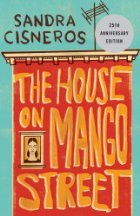
Book 15
I read The House on Mango Street because it is the One Book, One Chicago pick for this season. (Utter Scoundrel is now saying “Ahem, you haven’t read The Long Goodbye yet”. It’s on my shelf!)
This slim volume of vignettes is from the point of view of a young girl named Esperanza living in Chicago. The House is the first her family has ever owned, but it is rather too small for the group of them and she finds it shabby. She goes so far as to say she is ashamed.
What I like is that the stories illuminate her identity in several ways. There were many places where I could absolutely relate to her experience and others that were just..foreign. For example, Esperanza first gets a job to pay her tuition to Catholic school. Her father told her that “nobody went to public school unless they wanted to turn out bad”.
I know about kids that worked for pocket money. And kids that worked because they wanted new clothes. Hell – even kids that worked to help pay the bills. But I had never heard of kids that had to work because their parents wouldn’t send them to public school. Interesting.
There were pieces that were observations about the neighbors. One that wanted to go home and cried when her young son started to speak – English. One who was so pretty that her husband locked her in the house when he went to work. A school friend whose father hit her.
There was one toward the end that made me think:
She is talking with three old ladies at a funeral. They tell her to make a wish. Then one says:
“When you leave you must remember to come back. For the ones who cannot leave as easily as you.”
Esperanza was ashamed that they knew what she wished for. That she had made such a selfish wish. I thought, “Geez. Doesn’t every thirteen year old girl wish she could go away and never come back?”
Doesn’t every thirteen year old girl hate her name? Weren’t we all caught in a horrible place between wanting to climb trees and wanting to wear lipstick?
I understand they are teaching this book in schools now. I hope the thirteen year old girls get that message.

Liquid Lunch
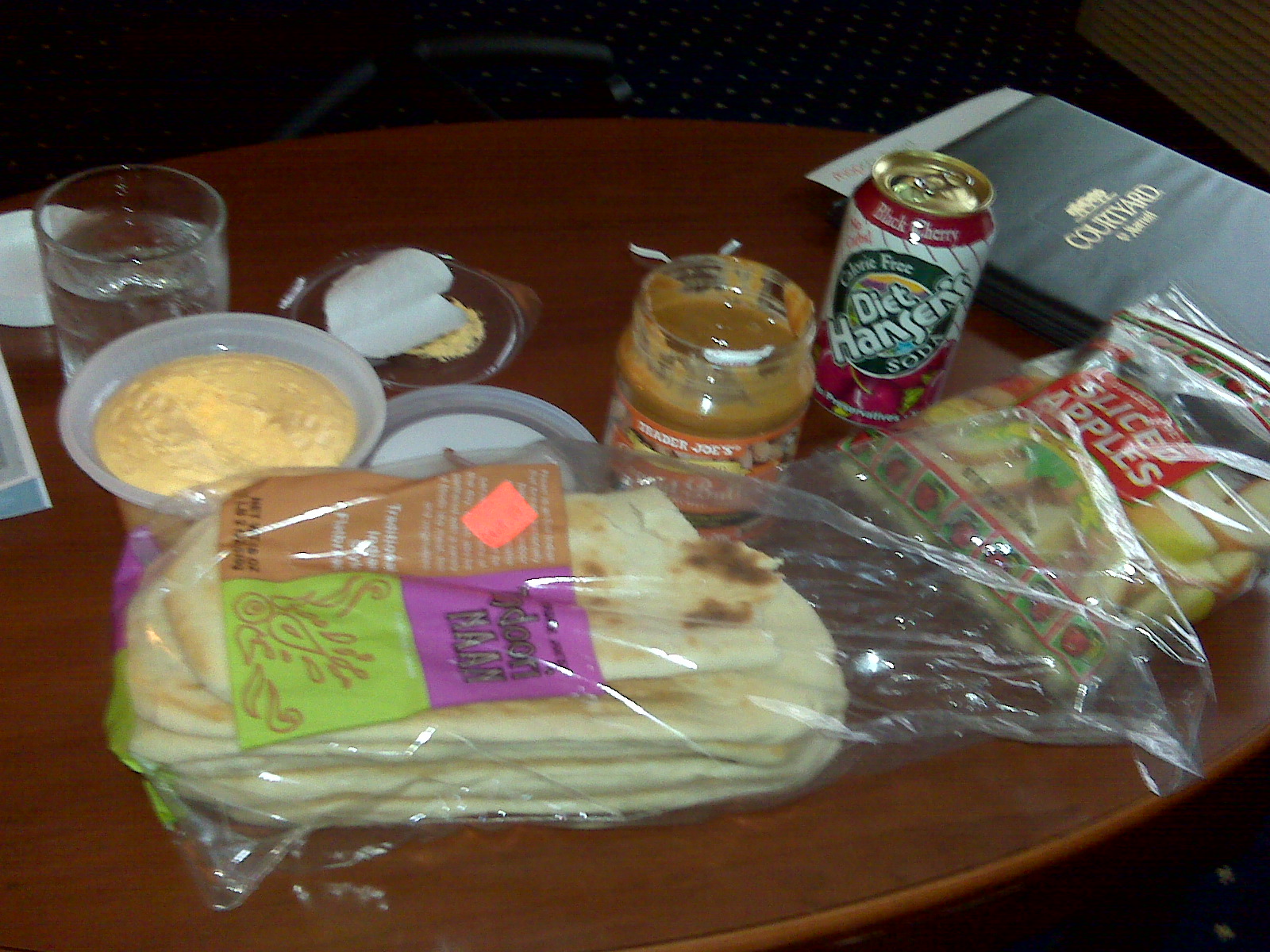
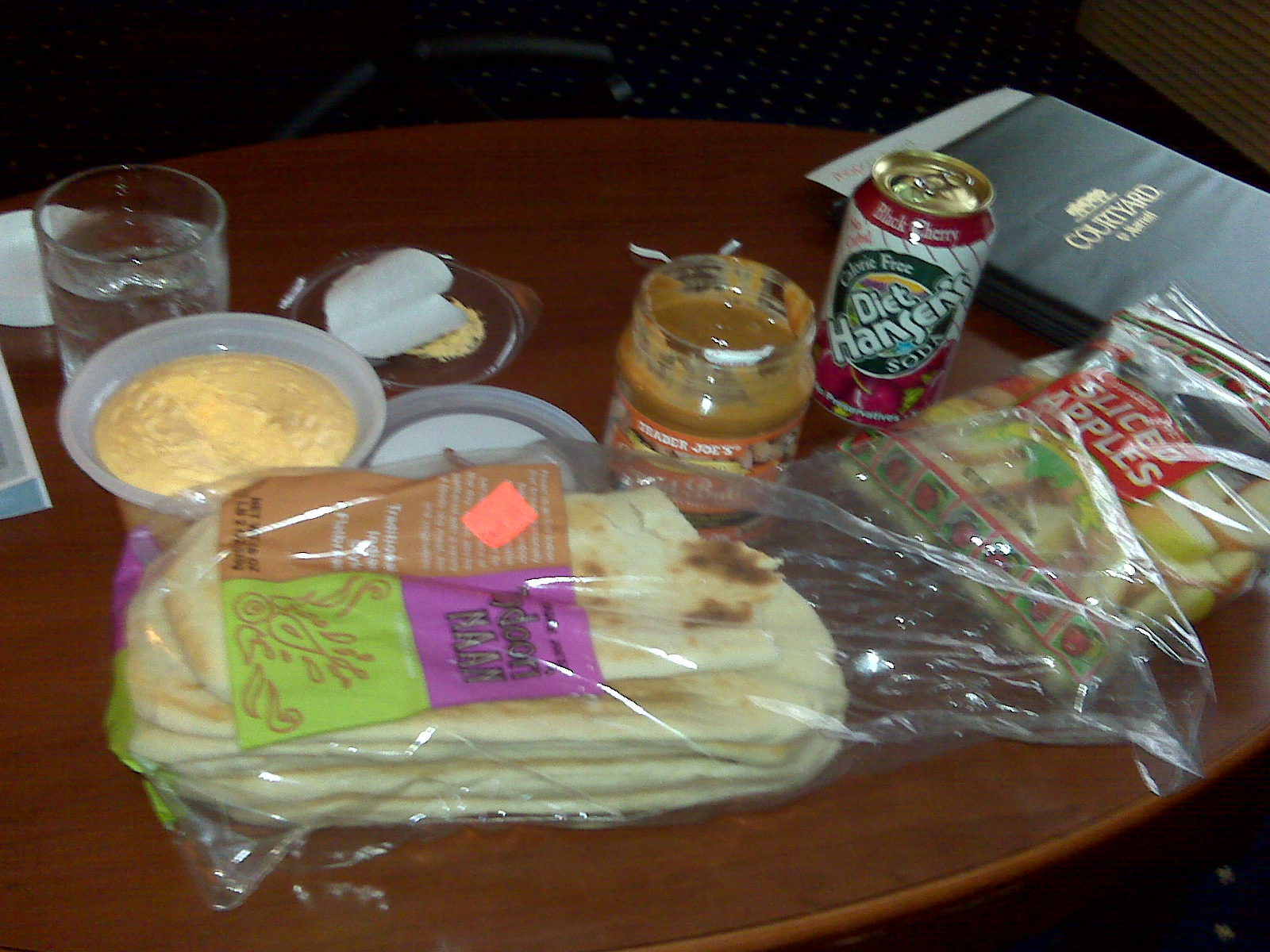
Yesterday, after a couple of tense meetings, I realized it was noon. I had a 1pm conference call before a 2:30 meeting. I knew I had to eat something, but I wasn’t hungry. I was all wound up. I remembered the summer I was sick and I didn’t feel like eating I went to the smoothie place. So I hiked over to Jamba Juice and picked up some peach concoction. With immunity boost. Whatever that is.
I was pretty hungry when I finally got home, but I made it through the day.
Today, I had lunch with Joy and we managed to not stuff ourselves. Which was good because I have to eat dinner early in order to be at the library for the 6-9 pm shift. But after going home, feeding Eloise and watching my mother scrub the kitchen from top to bottom (Terminix was visiting today), all I wanted was ice cream.
Aha. The Dairy Bar is open. This, Ladies and Gentlemen, is my first vanilla malt of the season.

It was awesome.
Back from Columbus
I was just reading somewhere that the traffic at mid-sized airports was way down. No kidding. I took this in Columbus this morning:

One airplane over something like six gates. I realize that Columbus is not O’Hare, but this is not normal.
Also not normal. Here is how Spooky feels about me and my travel schedule:
 Notice how he refuses to look at me.
Happy Trails
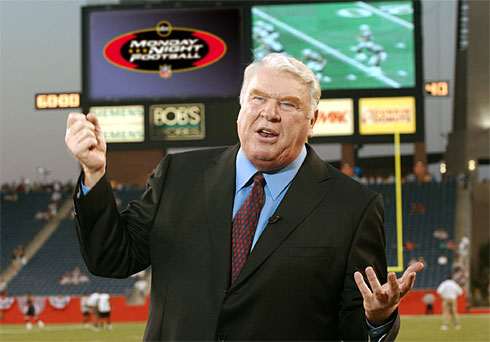 When I heard John Madden is retiring, I thought he must be sick. But he says he isn’t. He is 73 years old and wants to enjoy his grandchildren. Michael Hiestand at USA Today wrote the nicest article and if I wasn’t already aware, it became quite apparent as I read through that I am going to miss the guy.
Sunday Night Football is the best thing since Monday Night Football. Madden isn’t the entire reason, but he’s a big part of it. The reason that we should all kiss him – which I didn’t even know until today – is that he is pretty well responsible for our TV screens coloring in the unofficial first-down marker.
I love the unofficial first-down marker.
The great Mike Singletary is quoted as saying, “He called the game the way players and coaches like it to be called,” but I really think he called it like a fan. A fan that knew every possible nerd detail of the game, and then made up some new ones. For fun.
My personal favorite: “One knee (down) equals two feet” became, “One (butt) cheek equals two feet”. To explain when the ball is down or whether the player stayed in bounds.
I will not miss “turducken”.
Here’s my question. Once he is retired, will the Madden Curse live on?

Star Wars – Shatterpoint, by Matthew Stover
Shatterpoint, by Matthew Stover, is a Clone Wars novel following Mace Windu on a bad, scary mission to his home world. I read Stover’s novelization of Revenge of the Sith and it was a really good adaptation, so I was excited about this one.
The best compliment I have ever heard about a Star Wars novel was when the first Zahn novel was realeased. It was something like, “I could hear the John Williams soundtrack as I read it.”
I did, in fact, hear the John Williams soundtrack, as I read Shatterpoint.
Shatterpoint, incidentally, is the weak spot. The tiny point of weakness that you don’t even have to hit very hard on the strongest thing to get it to break. Master Windu’s gift is to see the shatterpoint in freaking everything.
The narrative started out rather slowly. There was fight after incident after fight as stuff got worse and worse. But Stover fleshed out this character, Master Windu, just as I imagined him. He answered one of the questions that had been bugging me for awhile:
You know all of the “don’t get attached” “learn to let go”-whatever that Yoda is always preaching? We know that Anakin flunked that class. We know that Obi Wan had a pretty damn hard time, too. Did any of the othe Jedi struggle with that concept?
Anyway. Stover addressed a “what the hell” question from Episode II:
“Instead of sending in all the Jedi to die, why didn’t someone just drop a bomb on the arena. Sacrifice one senator and two Jedi to end the war before it started?”
The answer, of course, is that Jedi don’t drop bombs. But the philosophical debate was pretty interesting. Geonosis messed Master Windu up. But, whoa, can he fight.
One of the best scenes was at the end, in Palpatine’s office. Master Windu was talking about how jedi were not designed for war. He said:
“It’s war. Not just that war, but war itself. When every choice you make means death. When saving these innocents means those innocents die. I’m not sure that any Jedi can survive those choices for long. “
Then Palpatine says:
“Who would have thought that fighting a war could have such a terrible effect on Jedi? Even when we win,” he murmered. “Who would ever have thought such a thing?”
The scene continues and I found it chilling. Which is pretty damn good for a Star Wars book.
 The Next Dark Age
