The Next Dark Age
We're in it Now
More About School Reading Lists
The Chicago Tribune is reporting a story about one of our suburbs in a tizzy over the freshman reading list. Apparently, a whole seven parents found the language in The Absolutely True Diary of a Part Time Indian to be “vulgar”.
Here is the gist of the argument:
“Andersen said she understands kids use profanity, but if it is part of the curriculum, the students will believe the school condones it.
“That is like saying that because Romeo and Juliet committed teen suicide, we condone teen suicide,” Whitehurst said. “Kids know the difference. Like it or not, that is the way 14-year-old boys talk to each other.””
Ms. Anderson, who the article makes a point to say has a teaching degree, wants to “start a national conversation” on warning labels for books. (rolls eyes)
There are labels. They are called Reading Levels. Oh, and the label on this book? Says that it won the National Book Award for Young People’s Literature.
The solution to the drama seems to be that there will be parents allowed on the committee that chooses the reading list for this high school.
What. Ever.
What Ms. Anderson has done here is made absolutely certain that every kid in that school reads the book to find the “vulgar” language. Wait. Maybe that was her point. Maybe she is a genius!
Somehow, though, I doubt it.
I haven’t read this book, so I can’t actually speak for the language. But I can pretty well guarantee that it doesn’t have any words that the average 14-year old hasn’t heard before.
Not any swear words, anyway.

Fahrenheit 451, by Ray Bradbury
Book 26
There isn’t much left to say about this one that hasn’t been said a million times before. It was a way better read as an adult. Some of the “future” details are uncanny. My favorite was getting cash in the middle of the night because there were robot tellers available 24/7. Also, the part about the presidential election:
A good looking guy named Noble vs. a runty guy named Hoag. Who is going to win? And the quote was something like, “Why would they even run a guy like that?” Which, of course, we hear regularly – who “they” run for office.
The only disappointing thing is that the world view is so small. That is by design, I understand. But some expanded stories from that universe might have been interesting.
What I Learned at the Pharmacy
I will wait until you are done laughing….
So. I hate the way people bark (ha! bark) at those behind the counter, so I would normally step up and say:
“Good Morning, my name is Anne and I believe my doctor has called in a prescription for me.”
You know, complete sentences and stuff. I was too embarassed for such an exchange in this case, so I imagine I was looking all shift-eyed when I mumbled my last name. While the lady was looking up the order, I thought I should grab some Claritin for my mother.
She finds the order. “For Shadow?” she asks, loud enough for every shopper in the Plaza to hear.
“Yes,” I practically whisper.
“Any allergies?” Loud again.
I hesitate. I think…sensitive stomach…smelly fish oil for his coat…wasn’t that weird thing that happens to his paws called an allergic reaction…
“IS YOUR DOG ALLERGIC TO ANYTHING?”
“Um…not medicine, no. I don’t think.”
She puts the pills in a bag and I sign something while she checks with God and the DMV regarding the Claritin. Now that the druggies have required us all to report in to the feds for a damn decongestant, I make a habit of picking some up for her when it is convenient.
The thing is, it was convenient a couple of weeks ago, when I ordered some other stuff from drugstore.com. And I also purchase my own prescription Allegra. Long story short, the reporting took forever and my receipt said:
“RESTRICTED QTY REACHED – DEA PLU”
Apparently, I am banned for the rest of the month from buying any more decongestants.
Also? The Claritin costs more than the Valium.
What has gone wrong with this country?
Book Swap Shelf
A guy at work e-mails me one day, asking if we might set up a Book Swap shelf at the office. He regularly contributes book recommendations to our employee newsletter. I like the idea, so I pursue it. I write some guidelines that are doomed to fall into chaos. Then I send out an e-mail saying that we are going to have a Book Swap shelf and everyone please bring in some books to get us started.
Of course, then I went home and tried to figure out what the heck I should contribute to the Cause. Really – anything I am sure I won’t read again goes to the Library. I don’t want to bring in anything really lame because if everyone did that, the project wouldn’t work. I settled on six books – three popular fiction and three pop culture non fiction – all trade paperbacks.
And all chick books. Which is more lame – that these are the books I pick to contribute or that I ever read them in the first place? And do I pull them out of my LibraryThing? Maybe I will just make a “Donated” tag.
The suggestion guy brought in six books. Mostly guy books. And one lady brought Atonement and The Known World. Both I have read and both I found great and neither are leaving my home library. I sent her an e-mail, to thank her and tell her so. She said these were duplicates or she wouldn’t have given them up either.
So. Ninety employees in this building and fourteen books.
I don’t think this is going to fly.

This is Obscene
The AP is reporting that Toledo, Ohio is ticketing residents for parking in their own driveways:
TOLEDO, Ohio – Residents of Toledo, Ohio, are complaining that they received $25 tickets for parking their vehicles in their own driveways.
Mayor Carty Finkbeiner says he stands by the citations handed out last week by the Division of Streets, Bridges and Harbor. He says the tickets were issued under a city law against parking on unpaved surfaces, including gravel driveways.
This, Ladies and Gentlemen, is beyond ridiculous. Every city is trying to find ways to make money, generally at our expense. And sometimes, if we are caught breaking the law through laziness or our presumptuous sense of entitlement, then so be it. But this?
Paving a driveway is not cheap. On, nevermind. I’m just going to get all worked up again.

Letting Them Eat Cake
MSN Money pointed me to an interesting editorial in Forbes magazine. The author is pointing out the plusses to the recession. For people that have money. It is all things we have heard before – the deals are out there, the service is better, etc. My opinion is that she is half correct, and half unbelievably insensitive.
I have said for months that as long as I have my job I will be just fine and I am grateful to have it. I still very much believe that even the people that have done a decent job of saving aren’t much more than one catastrophe away from financial ruin. I have said that I am spending money, probably more money than I would have a year ago, because my house needs work, because I can and because there are businesses that I want to support. And seriously, my house needs work.
For me, the interesting thing about the article was not the points that it makes, but the debate in the comments – both on the Forbes site and the MSN site. Some are trashing her, some just saying “you’ll get yours” and some…are agreeing with her. For a few, it is pointing fingers at people that weren’t (willing or) able to save well. For others, it was just the pleasure of reading a positive perspective. I guess we aren’t so much in this together anymore.

The Widow of the South, by Robert Hicks
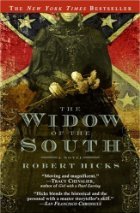 Book 25
I picked up The Widow of the South, by Robert Hicks, from the Library’s Used Book Store after my Book a Day Calendar recommended it.
Winner.
It is another “here is the vague historical basis and here is how I imagine the rest” novel. Like Coming Through Slaughter, there are notes at the end containing some verifiable facts. Way more than Coming Through Slaughter, I might add.
The facts are that on November 30, 1864 there was a big battle in Franklin, TN. 9,200 casualties over a five hour period, which the notes say is more than in 12 hours on D-Day and double Pearl Harbor. Just for some perspective. A private home was turned into a hospital. The lady of the manor, Carrie McGavock, had lost three of her five children to various illnesses in the preceding years but she pulled it together and took care of lots of people. 1,500 people are now buried in her backyard.
The novel is written from multiple points of view, which you know I love. And I was pleased with the use of language. This was from a Union officer, a rather minor character in the scheme:
“What I saw was the most beautiful thing I have ever seen, and I wished to never see it again. In the distance the entire Army of Tennessee stood on line. All of them. We’d been fighting out here in the west, in Alabama and Mississippi and Tennessee, always hemmed in by rivers and forests and tight little winding roads, and I had never thought about what thousands of men would look like if they stood out and faced us. But there they were. They shimmered in the distance, the warming air making them look wavy like a dream, something from another world. There were flags of all sorts flapping in the wind, the red and blue cross on their battle flag, the odd, faded blue and white flags of one of the divisions in the center. Sounds of brass bands, one playing “The Girl I Left Behind Me.” I wanted them to stay there always, frozen in their splendor. An odd happiness possessed me then, and I can only explain it by saying that I had fought them so long, and they had fought so hard I was proud to finally see them in their entirety.”
At its heart, the story is about life and death and when we are afraid and when we are numb and how we manage to connect with other people in the middle of it. And Nathan Bedford Forrest was a bastard.
I really love that the connection between Carrie and wounded Confederate soldier guy, Zachariah, was based on mutual understanding (or attempting) between people that otherwise had little in common. It was not about the smoochie-smoochies. It was not about escaping from the hell of the blahblahblah.
It kind of avoided the subject of slavery. In a “Carrie’s servant was a lifelong friend that never left her” way. Franklin had long been occupied by Union troops, so Mr. McGavock sent people south to family to avoid their being conscripted into the Union Army. Zachariah’s attitude was, “I don’t have a problem with them, but did we really fight that war so that this guy could have a cobbler shop?”
However, Zachariah had a moment after the war. Working on a train line or something, he saw a young black man that had been enslaved, for “crimes” and chained outside the camp. After awhile, he makes an appeal to Forrest, of all people, and the guy is set free. Zachariah and a bud know they are screwed so they bolt. The young man is caught and drowned. So what would have been the right thing to do?
The book begins and ends in 1894, with most of the story told in flashback. I would have appreciated more time spent in 1894. But I liked that the story didn’t drag on, so I can’t really complain about that. The best part is that it looks like Franklin Tennessee is prime territory for a road trip.
Road Trip!
Little City Book Sale 2009
Various libraries have various used used book sales all the time – you can find one almost every weekend. None come close (in suburban Chicago) to the Book Sale Formerly Known as Brandeis. It runs for over a week in a tent, in the parking lot of Old Orchard Shopping Mall in Skokie.
My strategy is to go on the second Saturday. On that day, the books are half the listed price. The most serious of the bargain hunters will go on the second Sunday, when all of the books are 50 cents. Read as: it is a mob scene that is not worth the trouble to me.
If you went to the web site, you would see that Little City is expanding it “merchandise” to attract more buyers from the general public, rather than the dealers. The “Dealers” as I know them are people that attend the sales with scanner guns and buy big piles of books to resell on the Internet. On one hand, they bring in a lot of cash. On the other, they arrive early and take a lot of the books that I would call great finds. Some book sales just ban the scanner guns altogether.
I had lunch plans with my brother’s family yesterday – Alex and I made pizza, which was pretty fun – so I didn’t get to Skokie until the afternoon. There seemed to be fewer books than last year. It might be because last year I arrived earlier in the day, but I suspect it was fewer donations. The prices were also lower than I remember.
Because I was clearly not in need of any books, I used all of my tricks:
- No shopping carts, no baskets. Only what I can carry in my own two hands. This trick works better at this sale than most because carrying around seven books for the hour or so that it takes to browse all of the tables is tiring. Anyway, I hate the carts.
- No buying anything that I can be reasonable sure will show up at my own Library’s Used Book Store. I would rather give the money to my own group.
- Wait. I didn’t use my third trick, which is that I only spend what I have in cash. That usually works because I don’t carry much cash, but I had been to the ATM too recently. And anyway – Little City takes Amex.
The final take was seven books for nine dollars. Now I just have to figure out where to put them.

Lesley Castle, by Jane Austen
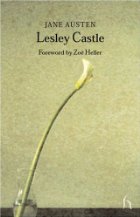 Book 24
Lesley Castle is actually three short stories in one book written by Jane Austen at age 16. No kidding, it reads exactly as you think Jane Austen would at age 16.
The first is a story told in letters. It is a satire of appearances and incredibly self-absorbed people – as Austen perfected when she was all growed up. One young lady tells her friend of an accident suffered by her sister’s fiance the day before they were to be married:
“Imagine how great the disappointment must be to me, when you consider that after having laboured both by night and by day in order to get the wedding dinner ready by the appointed time…”
So laying it on kind of thick, but funny.
The second part is a short, funny history of England. Under a heading for Mary I:
“This woman had the good luck of being advanced to the throne of England in spite of the superior pretensions, merit and beauty of her cousins, Mary Queen of Scotland and Jane Grey.”
It is all like that.
The third is a novella of Catherine, which reads more like the Jane Austen we really know. But sort of lame.
So yeah. Jane Austen as written by a sixteen year old.
A Life in the 20th Century, by Arthur M. Schlesinger, jr.
 Book 23
I have had a copy of Schlesinger’s journals on my to-be-read shelf for months. And his Pulitzer Prize winning The Age of Jackson has been there for about ever. Then I found A Life in the 20th Century, his memoir, at some used book sale or another. I think it was meant as the first volume of a memoir, because it only goes up to 1950, but Schlesinger didn’t live to finish it. The journals were published by his kids after he died.
In any event, Schlesinger was a professional historian who just happened to be in President Kennedy’s inner circle. Of course, we are barely introduced to Kennedy in this book. Instead it is really about the study of history. Schlesinger’s father was a history professor at Harvard, and there are plenty of stories and name dropping.
Half the book is taken up with WWII and fascism and communism. I really love what he has to say about his Greatest Generation:
“We call it the Good War at the millenium and smother it in sentiment. Of course, no war is any good, but occasionally a few, like the American Ciil War and the Second World War, are necessary. Still, even the few Good Wars can be corrupting and murderous.”
He notes that while we were all united the war effort, many people thought of it as payback for Pearl Harbor, rather than fighting the fascist dictator trying to take over the world. He was pointing a finger at the midwest. He also called out the war profiteers.
After the war, as he went back to the study of American History, Schlesinger writes about “revisionism”. In the 1940’s and 50’s there was a view of the Civil War, being published by the generation before his. It denied the Civil War was inevitable and denied slavery as the cause. This made Schlesinger nuts, but as he wrote, he noted that the perspective of the writer is very important. The generation before his was shaped by WWI. By virtue of those experiences, these men thought no war was inevitable. His own generation, shaped by WWII determined that some wars were necessary (as described above). I could talk about this forever.
Schlesinger quoted his own writings throughout the book and I really liked his self-commentary. Every once in awhile, he admits to being wrong. More often he maintains the truth of his statements while admitting to writing like an arrogant punk.
I like arrogant punks. I will be reading him again.
 The Next Dark Age